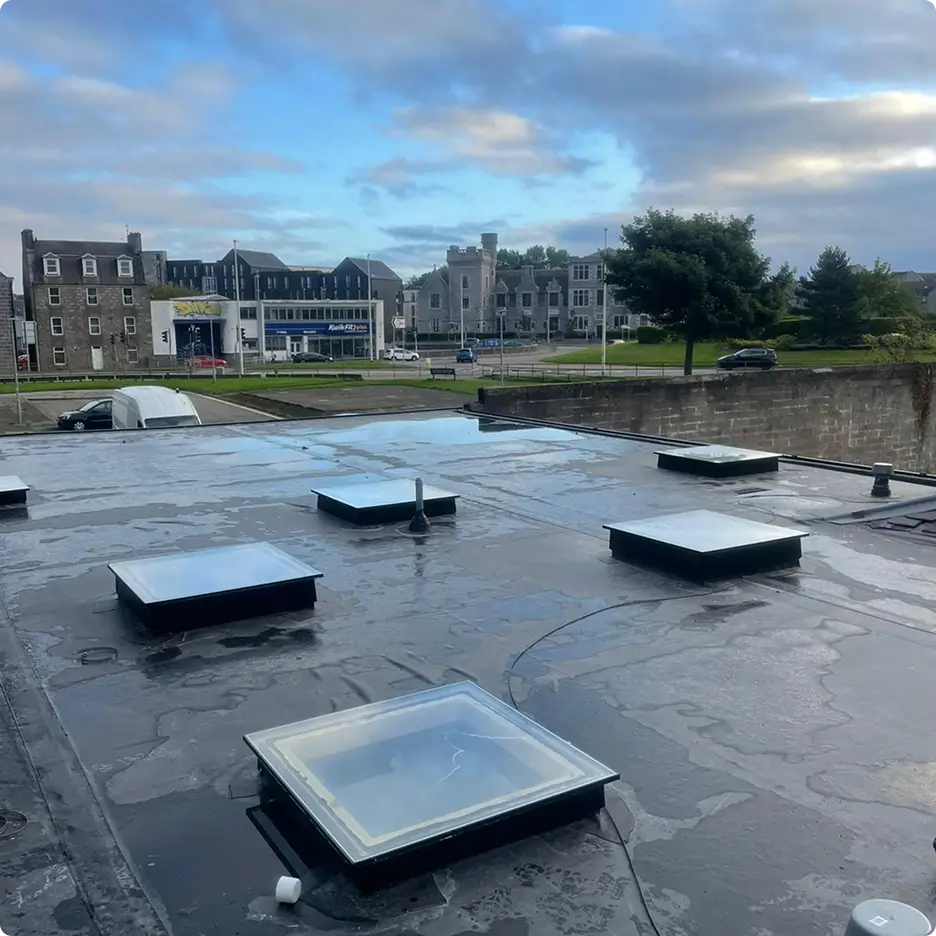
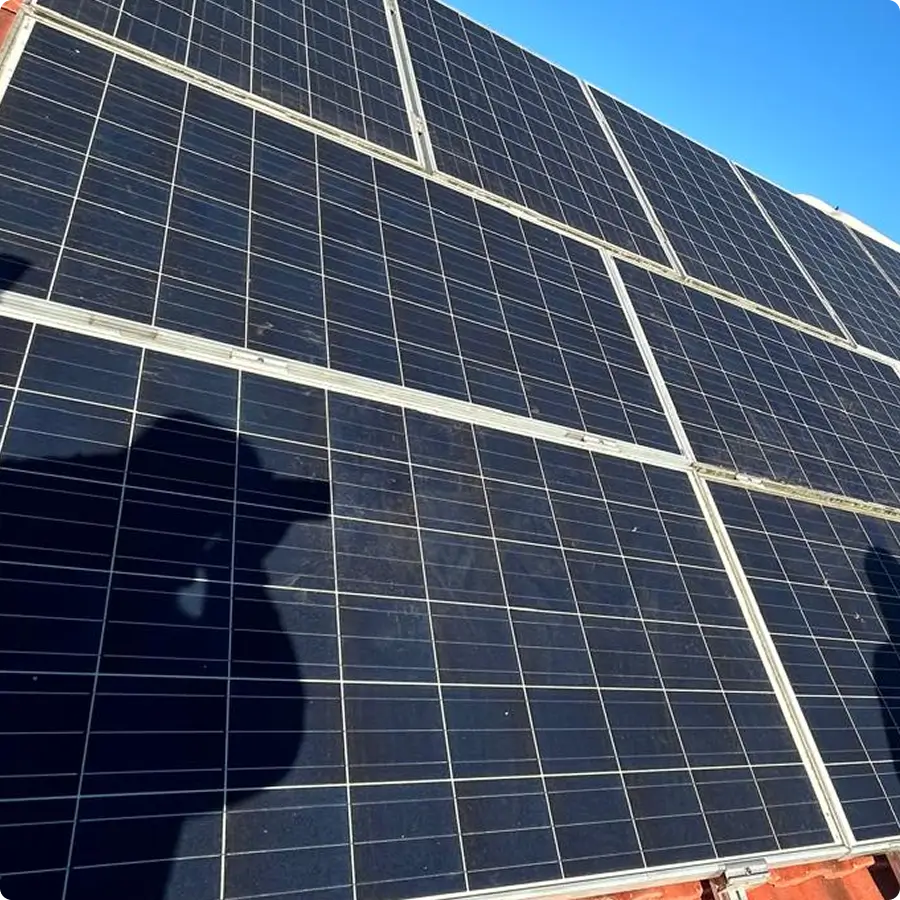
If your home, extension or commercial building has a flat roof, you might assume solar is off the table. In reality, flat roofs are often one of the easiest places to install panels. You aren't limited by the direction your roof faces, there's usually plenty of open space, and the panels can be angled to suit.
That said, a flat roof solar installation isn't quite the same as fitting panels to a pitched roof. The mounting system, the tilt angle and the condition of the roof underneath all affect how well the system performs and how long your roof lasts. This guide covers your mounting options, the best angles for the UK, and what to check before you go ahead.
Can You Put Solar Panels on a Flat Roof?
Yes. Solar panels can be installed on most flat roofs, including felt, EPDM rubber, GRP fibreglass and single ply membranes. The key requirements are a roof covering in good condition, a structure that can take the extra weight, and a mounting system that protects the waterproof layer.
Flat roofs also have a few advantages over pitched roofs:
- Orientation is flexible. Panels can be pointed south, or split east and west, regardless of which way the building faces.
- Panels are often hidden from view. On many flat roofs, panels sit behind a parapet or upstand and can't be seen from the ground.
- Access is easier. Cleaning, maintenance and future roof repairs are simpler without a steep pitch to work on.
Flat Roof Solar Mounting Options
Panels on a flat roof sit on a frame rather than directly on the roof surface. There are three main ways of holding that frame in place, and the right choice depends on your roof's structure, covering and exposure to wind.
Ballasted Systems
Ballasted frames are held down by weight, usually concrete blocks, rather than fixings. Because nothing goes through the roof, the waterproof covering stays intact. The trade-off is extra load, so a structural check is essential, and the ballast needs to be calculated for your site's wind exposure.
Mechanically Fixed Systems
Mechanically fixed frames are anchored to the roof structure below. They are lighter than ballasted systems and hold up well in exposed locations. Each fixing passes through the roof covering, so it must be properly sealed and flashed to keep water out. This is where having a roofer involved matters most.
East-West Systems
East-west systems mount panels back to back at a low angle, one row facing east and the next facing west. They fit more panels into the same space, catch the wind less and spread generation across the morning and evening. They can be ballasted or fixed.
What's the Best Angle for Solar Panels on a Flat Roof?
Most flat roof systems in the UK are tilted at between 10 and 15 degrees. That's lower than the theoretical ideal of around 30 to 40 degrees for south-facing panels, but it's usually the better choice on a flat roof for three reasons:
- Less wind load. Steeper panels act like sails. A lower tilt means less ballast or fewer fixings are needed to keep the system secure.
- Less shading between rows. Steep panels cast longer shadows, so rows have to be spaced further apart. A shallow tilt lets you fit more panels in the same area.
- Less visible. Low-angle panels are less likely to show above a parapet, which can help with planning.
The small amount of generation lost per panel is often outweighed by fitting more panels. One thing to avoid is laying panels completely flat. Below around 10 degrees, rain can't wash dirt off the glass, and standing water and debris build up and reduce output.
What to Consider Before Installing Solar Panels on a Flat Roof
The panels themselves are only half the job. Most problems with flat roof solar come from the roof underneath, so these are the checks worth making first.
The Age & Condition of Your Roof
A solar system is designed to last 25 years or more. If your flat roof covering is near the end of its life, it makes sense to replace it before the panels go on. Otherwise, the panels will need to be taken off and refitted when the roof fails, adding cost and disruption. A roofer can inspect the covering and tell you how much life it has left.
Whether the Structure Can Take the Weight
Panels, frames and ballast all add load to the roof. Ballasted systems in particular can be heavy. A structural assessment confirms whether the roof deck and joists can support the system safely, or whether a lighter fixing method is needed.
Protecting the Waterproofing
Any fixing that passes through the roof is a potential leak point. Even ballasted systems need protection mats under the frames so they don't wear or puncture the membrane. The safest results come from installers who understand both solar and flat roofing.
Wind Exposure
Flat roofs are exposed to uplift, especially at the edges and corners and on coastal or high-level sites. Your installer should calculate wind loads for your location and keep panels back from the roof edge.
Planning Permission
Most flat roof installations don't need planning permission, but the limits differ between England and Scotland:
- Homes in England: panels can sit up to 0.6 metres above the highest part of the roof, excluding chimneys.
- Homes in Scotland: panels can project up to 1 metre from the roof surface.
- Commercial buildings in England: panels can project up to 1 metre and must sit at least 1 metre from the roof edge.
Different rules apply to listed buildings and some conservation areas, so check with your local council if either applies to you.
Flat Roof Solar FAQs
Do Solar Panels on a Flat Roof Cause Leaks?
Not when they're installed correctly. Ballasted systems avoid roof penetrations altogether, and mechanically fixed systems are sealed and flashed at every fixing point. Leaks usually come from poor detailing or panels fitted to a roof that was already failing.
Are Solar Panels on a Flat Roof Less Efficient?
Each panel may produce slightly less than one at the ideal angle, but flat roofs often fit more panels and let you choose the best orientation. Overall output is frequently similar to, or better than, an awkwardly facing pitched roof.
Should I Replace My Flat Roof Before Installing Solar Panels?
If the roof is more than halfway through its expected lifespan or showing signs of wear, it's usually more cost-effective to replace it first. Doing both together means one set of access and no need to remove panels later.
Get Your Flat Roof Solar Installation Done Right
At Butlers Roofing, we're roofers first, which means we look at the roof under your panels as carefully as the panels themselves. We'll inspect your roof, confirm it can take the system, and recommend the right mounting option for your building. If your roof needs work first, we can handle that too, so your roof and solar system are built to last together.
Find out more about our solar panel installation and flat roofing services, or get in touch with our team today for a free, no-obligation quote.